The hallmarks of aging · The body's responses

Mitochondrial decline

Scientific name: Mitochondrial dysfunction

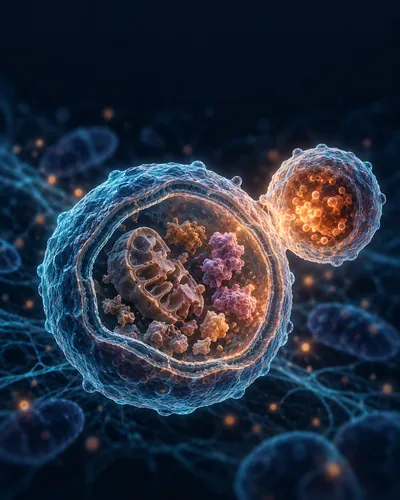
Mitochondria are the parts of a cell that turn food and oxygen into usable energy. With age, in many tissues, they work less efficiently, make less energy, and leak more harmful byproducts.

Measurable today: indirectly, through fitness tests. Direct tests are research only.

Why it matters

Why it matters to you

Energy-hungry organs feel it first.

Muscle, heart, and brain use the most energy. When their mitochondria decline, these organs have less reserve for effort, illness, and stress.

Fitness reflects it, and fitness tracks survival.

How much oxygen you can use in hard exercise depends partly on your mitochondria. Among 122,007 adults given treadmill tests, the least fit had about five times the death rate of the most fit over a median of 8.4 years.

Source: PubMed 30646252

Stressed mitochondria send out signals.

Damaged mitochondria release molecules the immune system reads as a sign of danger, which can add to the low-grade inflammation of aging.

Measurement

Can it be measured?

VO2 max (fitness test)

Clinics and some gyms

What it showsThe most oxygen your body can use during hard exercise, which depends partly on how well your mitochondria work.

LimitsIt also depends on heart, lungs, and blood, so it is not a direct test of mitochondria.

Mitochondrial DNA blood tests

Research only

What it showsHow many copies of mitochondrial DNA your blood cells carry, and how many mutations they hold.

LimitsIn about 750,000 people, the mutations in blood became visible mainly as single blood-cell families expanded with age, so the result reflects blood-cell aging more than mitochondria elsewhere.

Sources: PubMed 42203880

Muscle energy scans and biopsies

Research only

What it showsHow fast muscle recovers its energy stores after exercise, measured in a special MRI scan, or how much oxygen muscle mitochondria use in a biopsy.

LimitsThese need specialized equipment and labs, and there are no standard ranges for one person.

What would make it measurable

  • A simple blood or breath test that reflects mitochondrial function in muscle and brain.
  • Agreed ranges for healthy aging, not only for rare mitochondrial diseases.
  • Proof that improving these measures means healthier aging.
What can be done

What can be done about it?

Nine items in our catalog have human studies that support an effect on mitochondria, including aerobic exercise and coenzyme Q10. Many energy and mitochondria supplements are sold as antioxidants, but in a study of 750,000 people, the mitochondrial DNA mutations that build up in blood looked like copying errors, not oxidative damage. No product has been shown to slow aging in people through this route.

Three examples from our catalog, rotated daily: one with stronger evidence here, one with early evidence, and one where we found none. A sample, not a ranking or a recommendation. Ratings as of October 25, 2026. What the evidence levels mean.

Metabolites & Cofactors

CoQ10 (Coenzyme Q10)

Evidence for mitochondrial decline: Strong

Strong human evidence that it engages this aging driver.

Amino Acids & Derivatives

NAC (N-acetylcysteine)

Evidence for mitochondrial decline: Emerging

Only early or animal-stage evidence for this aging driver so far.

Gut & Fiber

Psyllium Husk

Evidence for mitochondrial decline: None found

We did not find qualifying evidence that it engages this aging driver.

We have not found strong evidence for it in any aging driver yet.

See the full picture for your own routine

The Longevity Intelligence Report shows how what you take and do covers mitochondrial decline and the other hallmarks. Members also see every item in our catalog ranked by the strength of its evidence for mitochondrial decline. Opens in December.

Get early access
New research

New studies on mitochondrial decline

Picked for what they add to the biology, and to the chance of one day treating it, in plain words. Research checked October 17, 2026.

Mitochondrial decline

Restoring one mitochondrial fat reversed muscle-aging features in mice

Mice, plus human muscle samples · Nature Aging · September 29, 2026

What they foundA fat in the mitochondrial membrane, cardiolipin, falls in aging muscle. Removing it in young mice reproduced aging-like muscle changes. Restoring it began to reverse muscle wasting and prevented the early deaths it caused.

What it does not showThese were engineered mice, not normal aging, and there is no way yet to restore it in people.

Why it mattersIt identifies a specific mitochondrial molecule that drives muscle aging and can be reversed, at least in mice.

Read the study on PubMed ↗
Mitochondrial membrane lipid cardiolipin controls fiber-type adaptations in aging muscle via estrogen-related receptor γ.
Mitochondrial decline

Older adults with stronger muscle mitochondria kept sharper thinking, mainly men

People, 506 older adults followed up to 12 years · Aging Cell · August 1, 2026

What they foundResearchers measured how fast muscles recovered energy after exercise, a sign of mitochondrial capacity. Faster recovery went with better thinking scores, and in men with slower decline in some thinking skills over time.

What it does not showAn association. It cannot show that better mitochondria protect the brain, and the long-term link was weaker in women.

Why it mattersIt connects mitochondria in muscle to brain aging in people, and in men the link may run through blood sugar.

Read the study on PubMed ↗
Muscle Mitochondrial Oxidative Capacity and Cognitive Decline Over up to a Decade: Sex Differences.
Mitochondrial decline

Mitochondrial DNA mutations in blood looked like copying errors, not oxidative damage

People, about 750,000 genomes · Nature · May 27, 2026

What they foundMutations in mitochondrial DNA rose sharply in blood after age 60. Their pattern matched copying errors rather than oxidative damage, and they became visible as single blood-cell families expanded with age.

What it does not showBlood only. Other tissues, such as muscle and brain, may age differently.

Why it mattersIt challenges the common claim that oxidative damage drives mitochondrial aging, a claim behind many antioxidant products.

Read the study on PubMed ↗
Mechanism of age-related accumulation of mtDNA mutations in human blood.

Follow the research on mitochondrial decline

Pick the ones you want to follow. Starting in December, we'll email you every two weeks when new studies or new tests come out on them. Longevity Intelligence Report members also get the plain-English read on each one: why it matters, and whether it should change what you're doing.

Free, no account needed. We keep your email and the topics you pick, nothing else. Unsubscribe anytime.

From the articles

Articles on mitochondrial decline

Go deeper

Connected hallmarks

How the biology works

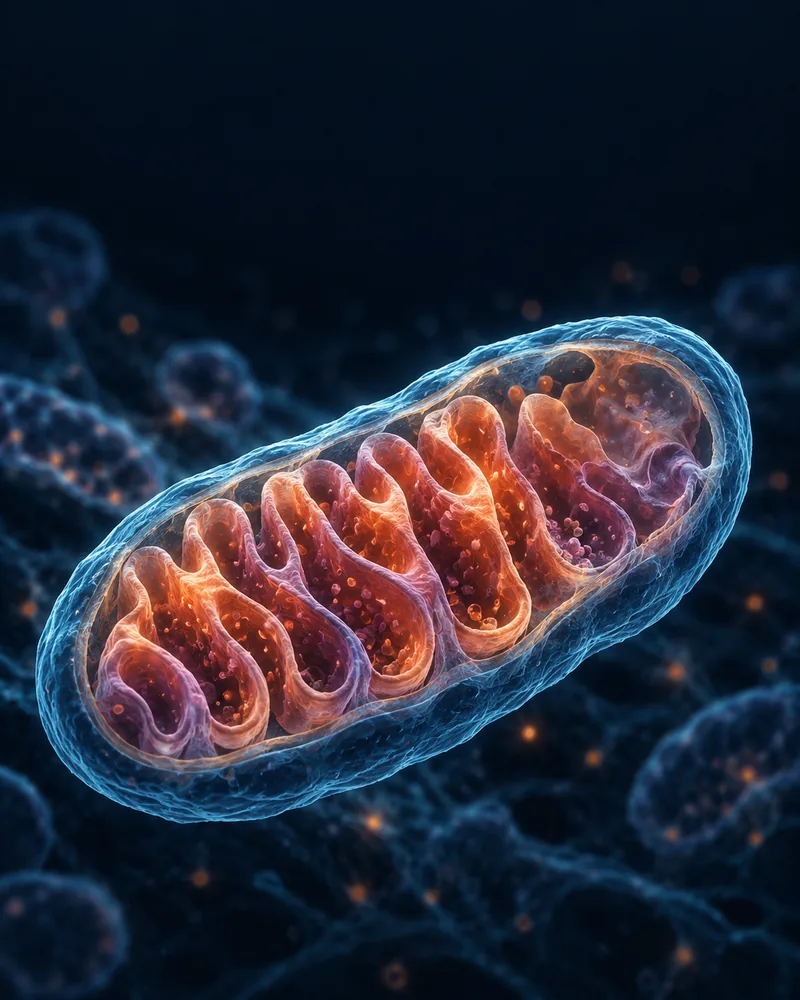
Mitochondria are the cell's power plants, and the way they make energy is the whole foundation. They take the food you eat and the oxygen you breathe and run them through a final assembly line called the electron transport chain, a row of protein machines embedded in the mitochondrial inner membrane that passes electrons down a series of steps. That flow pumps a charge across the membrane, and the cell uses that charge to make ATP (adenosine triphosphate, the universal energy currency every cell spends to do work) in a process called oxidative phosphorylation, which simply means making energy using oxygen. This is where the large majority of your usable energy comes from, which is why mitochondrial decline touches every high-demand tissue.

Reactive oxygen species are the double-edged byproduct, and this is the heart of why the hallmark is antagonistic. Reactive oxygen species (ROS) are unstable, reactive forms of oxygen that the electron transport chain always leaks a little of as it runs. At low levels they are not waste but signals: the cell reads a modest pulse of ROS as a message to ramp up its own antioxidant defenses, build more mitochondria, and strengthen itself, an adaptive response called mitohormesis (hormesis meaning a small dose of stress that makes the system more resilient). This is the real mechanism behind exercise. A hard workout transiently raises mitochondrial ROS, and the body answers by building a bigger, cleaner mitochondrial network, which is why fitness improves. The damage story only begins when ROS production becomes chronically excessive and overwhelms the antioxidant defenses, at which point the same molecules oxidize and injure nearby DNA, proteins, and fats. More is not better; the useful signal and the harmful flood are the same chemistry at different doses.

Mitochondrial DNA damage accumulates and feeds a vicious cycle. Unusually, mitochondria carry their own small loop of DNA, separate from the main genome in the cell's nucleus, and it sits right next to the ROS-leaking electron transport chain while carrying weaker repair machinery than nuclear DNA. So mitochondrial DNA takes a disproportionate share of oxidative hits over a lifetime. Because that DNA encodes parts of the energy-making machinery itself, damage to it produces faultier machinery, which leaks even more ROS, which causes more damage, a self-reinforcing loop that helps explain why mitochondrial function tends to slide rather than plateau with age.

The cleanup crews decline: failing mitophagy and biogenesis. A healthy cell constantly recycles its worn-out mitochondria and replaces them with new ones, keeping the network young. The recycling side is mitophagy, the selective clearance of damaged mitochondria, in which the cell tags a failing mitochondrion and digests it before it can do harm. This is the direct bridge to the recycling hallmark, and it declines with age, so broken mitochondria linger. The rebuilding side is biogenesis, the making of brand-new mitochondria, run by a master switch protein called PGC-1alpha that turns on the genes for building mitochondrial machinery. Exercise is the strongest natural trigger of PGC-1alpha. With age both arms weaken at once: the cell clears damaged units more slowly and builds fresh ones less vigorously, so the average mitochondrion gets older and leakier.

NAD+ decline pulls down the whole repair-favoring system. NAD+ (nicotinamide adenine dinucleotide, a helper molecule central to energy metabolism) is essential both for the electron transport chain to run and for a family of repair-and-maintenance enzymes called sirtuins that support mitochondrial health. NAD+ levels fall with age, which weakens energy production and sirtuin activity together, dragging down the same maintenance crew the cell needs most as its mitochondria deteriorate. This is why the NAD+ axis recurs across several hallmarks, including nutrient sensing and epigenetic maintenance.

Cardiolipin and membrane changes degrade the machinery's housing. The mitochondrial inner membrane has a signature fat in it called cardiolipin that helps hold the electron-transport machinery in its proper arrangement and keeps the membrane sealed. With age cardiolipin is lost and oxidatively altered, the membrane's careful structure loosens, and the energy-making assembly line becomes less efficient and leakier. Damaged cardiolipin also acts as one of the eat-me flags that mark a mitochondrion for clearance, tying membrane decline directly to the mitophagy story above.

Where treatment research is heading
Next few years

Exercise as the gold-standard mitochondrial intervention

Structured aerobic training, including steady moderate-intensity (zone 2) work and higher-intensity intervals, is the single most reliable way known to improve mitochondrial number, quality, and the body's whole network, working through the natural mitohormesis loop of a brief ROS signal driving PGC-1alpha to build new mitochondria. It carries deep human outcome data, since cardiorespiratory fitness measured as VO2max is one of the strongest predictors of longevity we have.

Not ready yet: Adherence is the real bottleneck rather than the biology, no pill matches the effect of consistent training, and VO2max gains are a whole-body proxy that cannot confirm exactly how much any one tissue's mitochondria improved.

NAD+ precursors and urolithin A under study

NAD+ precursors (compounds such as nicotinamide riboside and NMN that aim to restore the energy-and-repair coenzyme that falls with age) and urolithin A (a gut-derived metabolite that specifically promotes mitophagy, the clearance of damaged mitochondria) are in human trials, and urolithin A has early human data on muscle endurance and mitochondrial gene expression. Both aim to support mitochondrial maintenance without requiring the discipline of exercise.

Not ready yet: Effect sizes in healthy people are small and inconsistent, raising a blood NAD+ level does not prove the coenzyme reached and helped the mitochondria that matter, and long-term outcome data beyond surrogate markers are missing.

Mitochondria-targeted antioxidants (MitoQ, SS-31)

Rather than flooding the whole body with antioxidants, these compounds are engineered to concentrate inside mitochondria, where the excess ROS actually does its damage. MitoQ attaches an antioxidant to a charged tag that accumulates in mitochondria, and SS-31 (elamipretide) targets and stabilizes cardiolipin, the signature inner-membrane fat that degrades with age. Both have shown improvements in animal and early human studies of conditions with heavy mitochondrial involvement.

Not ready yet: Human results are mixed and mostly in disease states rather than healthy aging, and because low-level ROS is a beneficial adaptive signal, blunting it too aggressively risks dampening the very mitohormesis that makes exercise work.

Further out

Targeted mitophagy and biogenesis therapeutics

The next generation aims to directly switch on the cell's two declining maintenance arms, the recycling of damaged mitochondria (mitophagy) and the building of new ones (biogenesis via PGC-1alpha), rather than just adding antioxidants. Drugs and compounds that specifically induce mitophagy could clear the leaky, damaged mitochondria that accumulate with age and let the cell rebuild a younger network.

Not ready yet: Optimal human dosing, tissue targeting, and proof of a real healthspan benefit are unestablished, and pushing recycling or biogenesis too hard risks unintended effects, since both processes are tightly regulated for good reason.

NAD-axis approaches to restore the repair-favoring system

Because NAD+ supports both energy production and the sirtuin repair enzymes that maintain mitochondria, and because it falls with age, approaches that durably restore NAD+ or activate the downstream sirtuins aim to lift the whole maintenance system at once, supporting mitochondrial health, DNA repair, and metabolic function together.

Not ready yet: Human evidence that raising NAD+ meaningfully improves aging outcomes is early and inconsistent, sirtuin biology proved more tangled than initial excitement suggested, and a marker change is not a proven health benefit.

Long shots

Mitochondrial transplantation or transfer

An idea that sounds like science fiction but is being actively explored: physically delivering healthy mitochondria into failing cells to restore their energy capacity. Cells are known to naturally hand off mitochondria to one another, and early experimental work has injected isolated mitochondria into oxygen-starved heart tissue, hinting at a future where energetically failing tissues like heart and brain could be re-powered.

Not ready yet: Getting transplanted mitochondria to survive, integrate, and persist in the right cells across a whole tissue is unsolved, the early human work is confined to narrow emergency settings, and scaling it into a durable therapy is far off.

Mitochondrial gene therapy

The far-horizon vision is to repair or replace the damaged mitochondrial DNA that accumulates with age, fixing the energy-making machinery at its genetic source rather than managing the downstream leak. New tools that can edit mitochondrial DNA, which long resisted the gene-editing approaches that work on nuclear DNA, have begun to make this conceivable.

Not ready yet: Each cell carries many copies of mitochondrial DNA and editing them reliably and safely at scale across the body is unproven, delivery is unsolved, and the off-target and toxicity risks of editing the energy machinery are serious.

Facts and sources on this page checked October 17, 2026. This page explains research. It is not medical advice or a recommendation to take anything. How we grade the evidence.