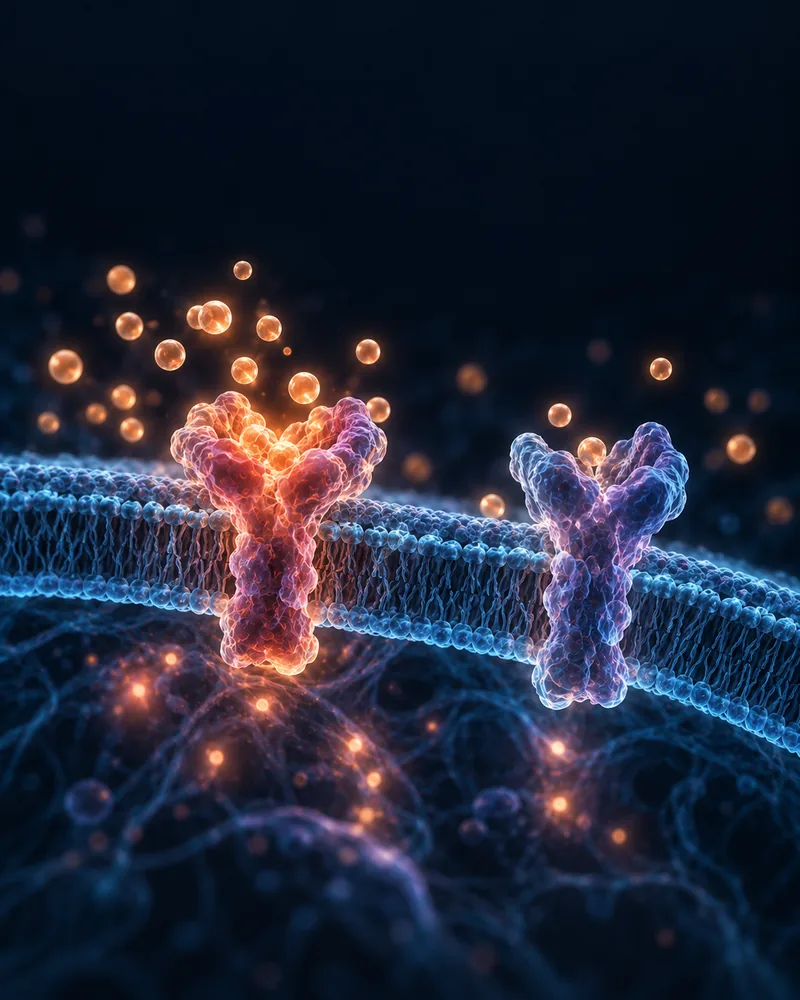
Insulin and IGF-1 are the body's fed and grow signal. Insulin is the hormone released when you eat, telling cells to pull sugar out of the blood and store it, while IGF-1 (insulin-like growth factor 1, a growth hormone closely related to insulin) tells cells to grow and divide. Both work through the same downstream chain, the PI3K-AKT route, that pushes cells toward building and storing rather than recycling. When meals are frequent and large for years, cells are flooded with this signal so often that they start ignoring it, which is insulin resistance: the body has to shout louder (release more and more insulin) to get the same effect, and chronically high insulin is itself a growth-promoting, pro-aging signal.
mTOR is the master growth switch that senses abundance. mTOR (mechanistic target of rapamycin, a central control protein named after the drug that blocks it) reads the supply of amino acids, the building blocks from dietary protein, and of energy and insulin signaling. When fuel and protein are plentiful, mTOR switches on and the cell pours its resources into making new proteins and growing, and it deliberately suppresses autophagy, the cell's recycling and self-cleaning process. That is exactly what you want during growth and after exercise. The problem is chronic activation: if mTOR almost never gets the chance to switch off, the cleanup that should happen during the fasted state rarely runs, and damaged components accumulate.
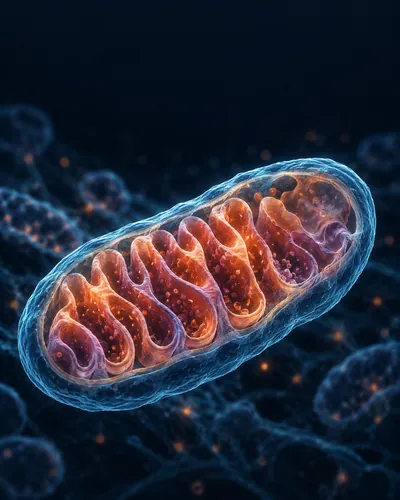
AMPK is the opposite sensor, the one that fires when fuel runs low. AMPK (AMP-activated protein kinase, an energy gauge) switches on when the cell's energy charge drops, during fasting, exercise, or calorie restriction. When it fires it does the reverse of mTOR: it suppresses growth, switches on autophagy, prompts the cell to build new mitochondria (the power plants), and shifts the body toward burning stored fat. AMPK and mTOR sit on opposite ends of the same seesaw, and a youthful metabolism tips cleanly back and forth between them across the day; an aging, always-fed metabolism gets stuck with the seesaw pinned to the mTOR side.
Sirtuins are the fourth sensor and they run on a coenzyme that falls with age. Sirtuins are a family of enzymes (SIRT1 through SIRT7) that promote stress resistance, support mitochondrial health, help repair DNA, and help keep the epigenome correctly set. They depend on NAD+ (nicotinamide adenine dinucleotide, a helper molecule central to energy metabolism), and because NAD+ levels decline with age, sirtuin activity tends to fade too, weakening this whole repair-favoring arm just as the growth arm is overactive.
The four systems share one job: the growth-versus-maintenance tradeoff. A cell cannot maximize growth and maximize repair at the same time, because the resources and the molecular machinery overlap, so it has to choose moment to moment. Insulin/IGF-1 and mTOR vote for growth and storage; AMPK and sirtuins vote for maintenance and recycling. This is why the same hallmark can be protective and harmful: the growth vote is correct when you are young, healing, or building muscle, and the maintenance vote is correct when you are fasted or under stress. Aging is less about one vote being wrong and more about the balance getting frozen on the growth side.
The levers that move this balance are mostly behavioral, which is why this hallmark is so modifiable. Calorie restriction, periods of fasting or time-restricted eating, exercise, and lower refined-carbohydrate intake all lower insulin and mTOR and raise AMPK and sirtuin activity, shifting the body back toward repair. Dietary protein is the trickiest input, because it raises mTOR (which you want for building muscle) while the longevity literature often prizes lower mTOR, which is a real tension rather than a settled answer. These are the same biological switches that caloric-restriction research in animals has been pulling for decades.
Metabolic inflexibility is the visible endpoint. A healthy metabolism switches fuel sources easily, burning sugar after a meal and fat between meals, and the rapid back-and-forth between the growth and repair sensors is what makes that switch clean. With chronic overfeeding and insulin resistance the body loses this flexibility, getting stuck half-burning both fuels inefficiently, which is the practical, whole-body face of deregulated nutrient sensing and a common thread linking it to type 2 diabetes, fatty liver, and cardiovascular disease.