DNA methylation is the best-studied tag. A methyl group is a small chemical cap (one carbon with three hydrogens) clipped onto the DNA, almost always at a spot called a CpG site, which is just a cytosine letter (C) sitting next to a guanine letter (G) along the strand. When these caps cluster on a gene's control region they usually turn that gene down or off. With age the pattern drifts in a characteristic way: regions that are normally heavily capped lose caps, and some regions that are normally bare gain them, so the cell's careful on/off map of its genes gradually smears. This drift is so reproducible that it is exactly what the methylation clocks read.
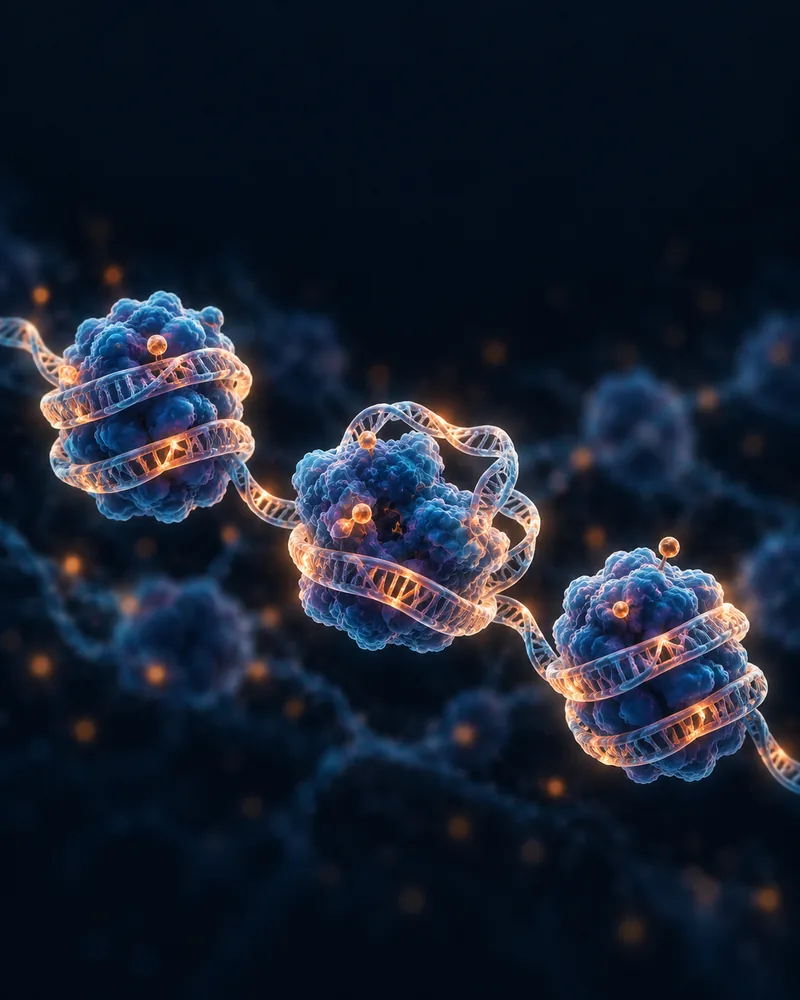
Histones are the second layer. DNA does not float loose; it is wound around spool-shaped proteins called histones, and the tails of those spools carry their own chemical tags (acetyl groups that loosen the wrapping and open genes, methyl groups that can open or close them depending on where they land). With age these histone marks are lost and redistributed, so the packaging that should keep certain genes tightly wound and silent loosens, and genes that should be active get locked away. The cell's filing system slowly disorganizes.
Heterochromatin loss is a specific and important version of this. Heterochromatin is the densely packed, switched-off portion of the genome, the part kept tightly coiled so it stays quiet, including ancient parasitic DNA elements that are supposed to remain silenced. With age this dense packing erodes (the field calls the broad phenomenon epigenetic drift), silenced regions wake up, and previously parked genetic elements can start firing, adding noise and inflammation.
Chromatin remodeling machinery, the molecular machines that physically slide and reposition histones to open or close stretches of the genome, also loses precision with age. The result is that access to genes is granted and denied in the wrong places, which is the mechanical side of the same identity-blurring story.
Net effect: loss of cellular identity. Add up drifting DNA caps, scrambled histone marks, eroding heterochromatin, and sloppy remodeling, and cells partly forget the tightly controlled gene program that made them a specific cell type. They tilt toward inflammatory and stress gene programs and away from their specialized jobs. This is the cell-level meaning of epigenetic aging.
The information theory of aging and partial reprogramming. One influential idea frames aging here as a loss of information: the DNA hardware (the letters) stays largely intact, but the epigenetic software (which genes are on or off) gets corrupted over time, like scratches accumulating on a disc whose underlying data is still there. The provocative follow-on is partial reprogramming: briefly exposing cells to a subset of the Yamanaka factors (OSK, three of the four master genes Shinya Yamanaka used to rewind adult cells all the way back to a stem-cell state) appears to roll the epigenetic settings back toward a younger pattern without fully erasing the cell's identity. In dishes and some animal tissues this has restored youthful gene-expression patterns, which is why this hallmark draws enormous interest, but the same approach pushed too hard turns cells into tumors, so the entire challenge is doing a little of it safely.