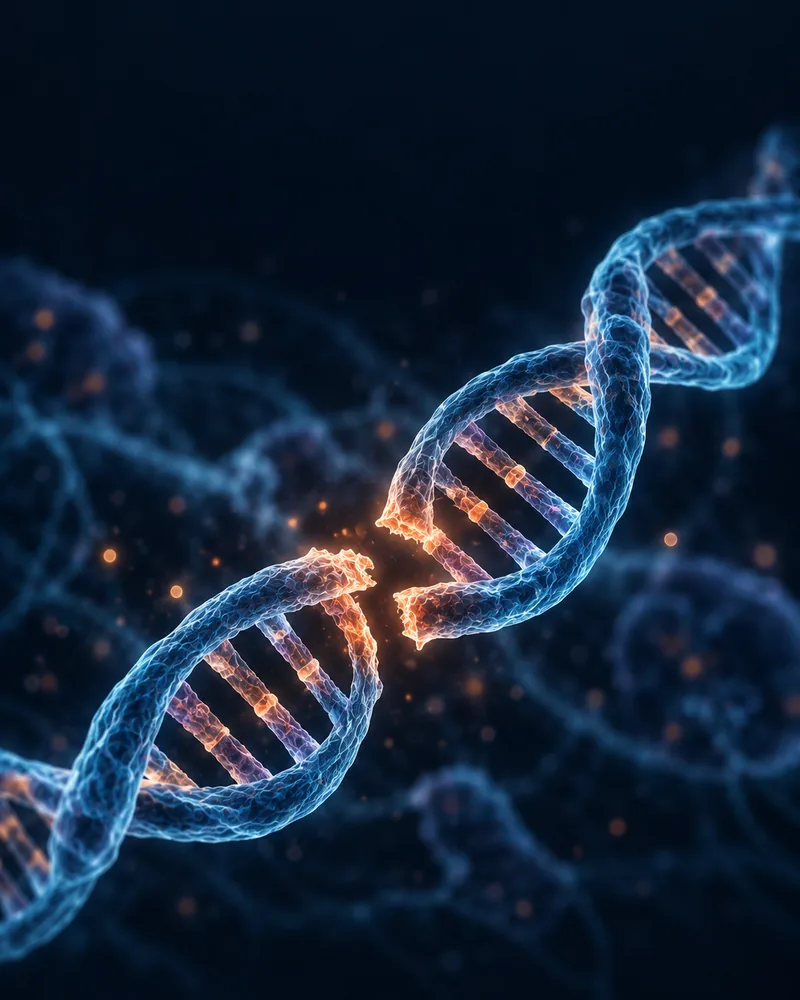
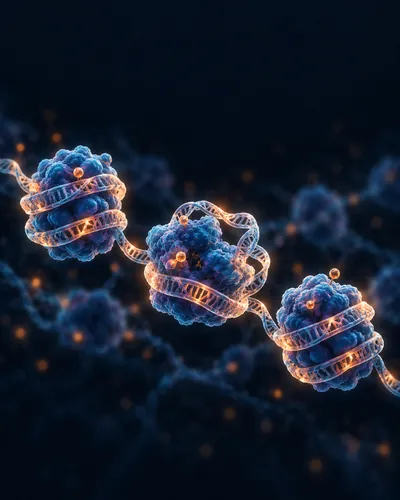
Damage comes from inside and outside the cell. Reactive oxygen species (unstable oxygen byproducts of normal energy production in the mitochondria) chemically nick and oxidize DNA, while ultraviolet light, radiation, and environmental chemicals add their own hits, and the simple act of copying DNA before a cell divides introduces replication errors. The two most serious lesions are single-strand breaks (a cut in one of the two DNA strands) and double-strand breaks (both strands severed at once), the latter being the hardest to repair correctly.
Cells run several distinct repair crews, each tuned to a different kind of damage. Base excision repair (BER) swaps out a single chemically altered DNA letter; nucleotide excision repair (NER) cuts out a short stretch around bulkier distortions such as sunlight-induced damage; and double-strand breaks are mended either by homologous recombination (HR), an accurate method that copies the missing information from the cell's second, intact copy of the chromosome, or by non-homologous end joining (NHEJ), a faster but error-prone method that simply glues the broken ends back together. NHEJ is quick but can leave small scars, which is one way mutations creep in.
Damage-sensor proteins called ATM and ATR act as alarm bells. When they detect breaks they activate a master switch protein, p53, which pauses the cell (often through a stop protein called p21) to buy time for repair, or, if the damage is too severe, orders the cell to self-destruct or to enter senescence (a permanent non-dividing state). This decision point is the cell's core quality-control checkpoint.
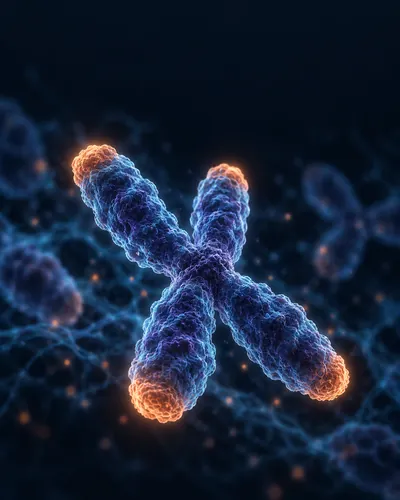
When repair fails, lags behind, or the checkpoints are bypassed, mutations become permanent and can stack up into chromosomal instability, meaning whole chunks of chromosomes get lost, duplicated, or rearranged. In blood-forming cells this shows up as clonal hematopoiesis, where a single mutated stem cell quietly expands into a large family of cells carrying the same mutation, a process linked to both blood cancers and cardiovascular risk.
The genome inside the mitochondria (the cell's power plants carry their own small loop of DNA) is especially exposed, because it sits right next to the reactive byproducts of energy production and has weaker repair machinery than the main genome in the nucleus. Mitochondrial DNA damage feeds back into worse energy production and more reactive byproducts, tying genomic instability tightly to mitochondrial decline.